
Modern Methods of Gold Ore Processing: From Traditional to Cutting-Edge Technologies
September 3, 2025
The evolution of gold extraction methods continues to transform mining into a more efficient, cost-effective, and environmentally responsible industry.
In today's mining industry, processing techniques have evolved to address declining ore grades, environmental concerns, and economic pressures. This article explores the traditional and innovative methods that define modern gold processing, offering insights into how technology continues to revolutionize this ancient practice.
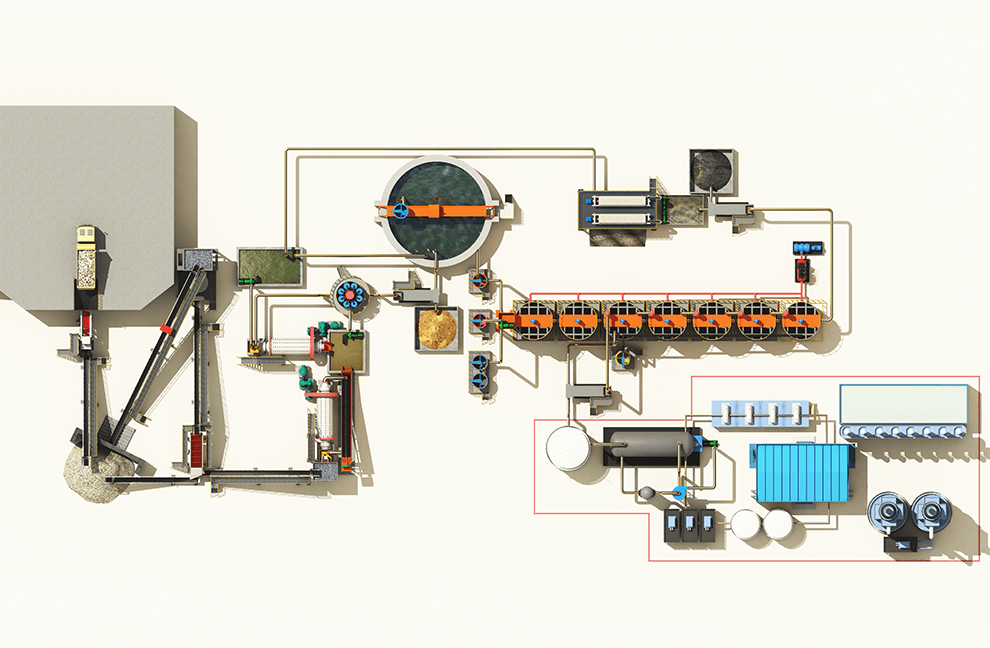
Gold ore processing typically begins with crushing and grinding to liberate gold particles from the surrounding rock. The specific methods employed thereafter depend on several factors, including:
1.Ore mineralogy and gold distribution
2.Gold particle size and composition
3.Economic considerations
4.Environmental regulations
5.Available infrastructure and resources
Understanding these factors helps determine the most appropriate processing route for each specific ore type.
ZOOMJO GROUP provides free complete solution, free tech guide, free 3D flowchart design, free product catalogue, free price quotation, and free factory visit and we provide customized service and the price depends on the specific needs.
The first step in most gold processing operations involves reducing the ore size to liberate gold particles. Recent innovations in this area have focused on energy efficiency and process optimization.
Crushing: Jaw and cone crushers reduce the size of the run-of-mine ore to gravel.
Grinding: Ball mills or autogenous mills pulverize the ore to an ideal particle size for the separation process
The cone crusher(advanced comminution circuits now often incorporate high-pressure grinding rolls (HPGR), which create micro-cracks in ore particles, significantly improving leaching efficiency in downstream processes.) implemented at Shanta Gold's New Luika mine in Tanzania, demonstrates how modern equipment can enhance productivity while reducing operating costs. This technology crushes granite down to -25mm, optimizing the material for subsequent gold extraction processes while simultaneously producing valuable aggregate for local infrastructure projects.
Gravity separation remains one of the most cost-effective methods for recovering free gold particles, especially in coarse-grained ores. This technique exploits the high density of gold relative to most gangue minerals.
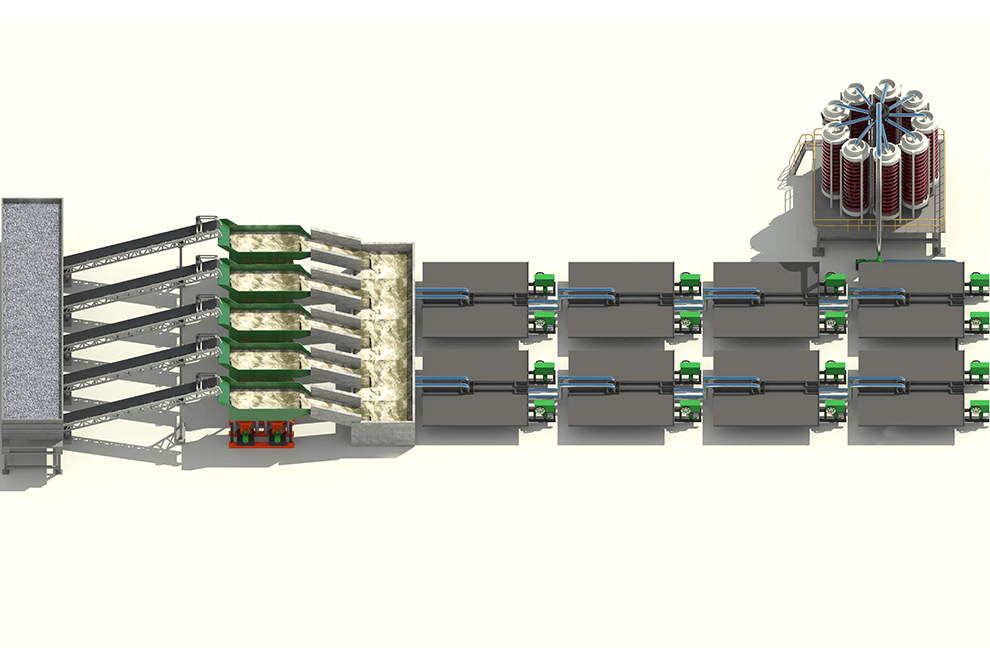
Applicable Ores:
• Placer or vein gold ores with coarse gold particles
• Ores with a significant difference in gold and gangue density
Common Equipment:
• Jig
• Shaking Table
• Spiral Concentrator
• Centrifugal Concentrator
Modern gravity separation has seen significant advancements:
Enhanced centrifugal concentrators that use higher G-forces to separate fine gold particles
Improved shaking tables with advanced vibration and sorting mechanism
Multi-stage gravity circuits that maximize recovery across various particle sizes
These technologies offer lower energy consumption, reduced reagent use, and minimized environmental impact compared to some chemical methods
For ores where gold is associated with sulfide minerals or requires liberation from specific host rocks, froth flotation proves highly effective. This method separates hydrophobic particles from hydrophilic ones by introducing chemicals that make gold-bearing minerals water-repellent.
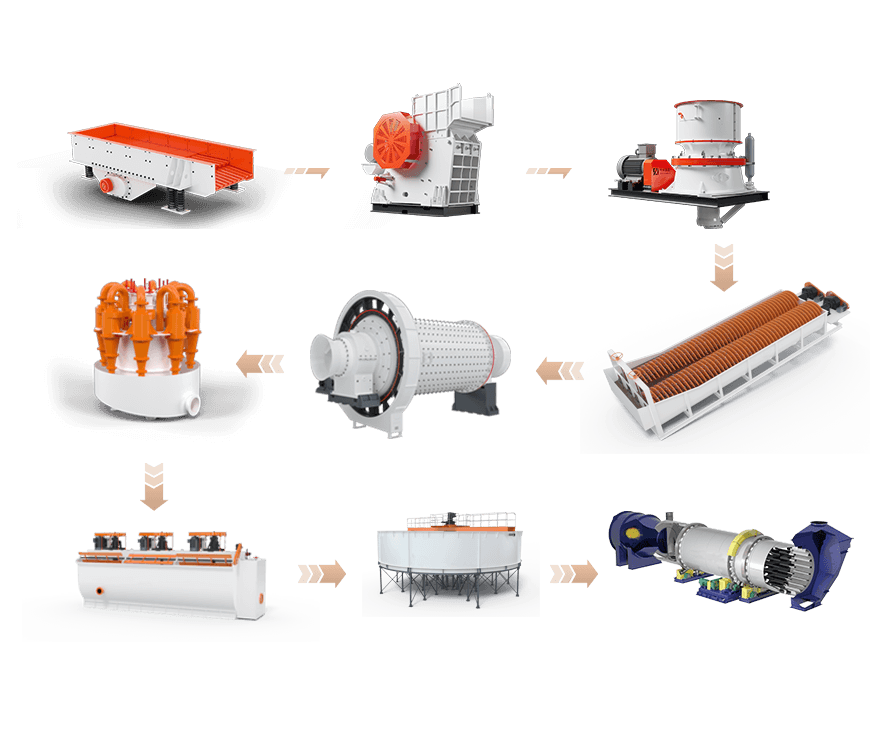
Applicable Ores:
Ores with close coexistence of gold and sulfides
Gold-bearing polymetallic ores difficult to directly process using the cyanide method
Flotation Reagents:
Collectors (xanthate, nitroglycerin, etc.)
Frothers (pine oil, alcohols, etc.)
Conditioners (lime, cyanide, etc.)
Recent innovations in flotation include:
Specialized collectors and frothers that improve selectivity
Advanced control systems that optimize process parameters in real-time
Column flotation cells that provide better separation efficiency
Cyanide leaching remains the dominant method for gold extraction globally, despite environmental concerns. The process involves dissolving gold using a dilute cyanide solution, typically achieving recovery rates above 90%.
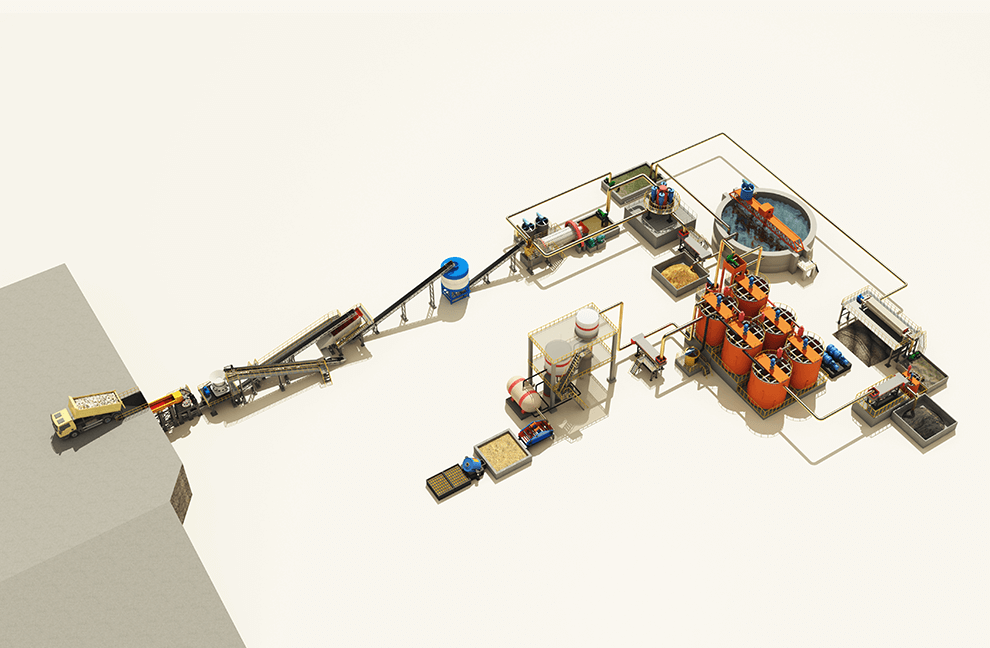
Applicable Ores:
• Oxide Gold Ores
• Ores with Fine, Dispersed Gold
Cyanidation Methods:
• Percolation Cyanidation (Suitable for Porous Ores)
• Agitation Cyanidation (Most Widely Used)
• Heap Leaching (Suitable for Low-Grade Ores)
Improved Processes:
Resin In-Pulp (RIP)
Carbon In-Pulp (CIP)
Carbon In-Leaching (CIL)
Modern cyanidation practices have emphasized:
Improved cyanide management and recycling
Enhanced safety protocols to prevent environmental contamination
Advanced monitoring systems to optimize process efficiency
Growing environmental concerns and regulatory restrictions have spurred development of alternative lixiviants:
1. Thiourea Leaching: Offers faster kinetics than cyanide but at higher cost.
2. Halogen-Based Systems: Dundee Sustainable Technologies' CLEVER process uses a hypochlorite solution in an acidic environment with catalytic amounts of sodium hypobromite to dissolve gold. This approach reduces leaching time from 36 hours to just a few hours while eliminating cyanide use.
3. Thiosulfate Leaching: Particularly effective for carbonaceous or preg-robbing ores where cyanide performance is poor.
Table: Comparison of Gold Leaching Methods
| Method | Reagents Used | Leaching Time | Gold Recovery | Environmental Impact |
|---|---|---|---|---|
| Cyanidation | Cyanide compounds | 24-48 hours | >90% | High toxicity concerns |
| CLEVER Process | Hypochlorite/Hypobromite | 2-4 hours | >95% | Minimal toxic residues |
| Thiourea Leaching | Thiourea, ferric ions | 6-12 hours | 85-95% | Moderate environmental impact |
| Thiosulfate Leaching | Ammonium thiosulfate | 12-24 hours | 80-90% | Low toxicity |
Heap leaching has emerged as a preferred method for processing low-grade gold ores due to its simplicity and cost effectiveness. The process involves stacking crushed ore on an impermeable liner and irrigating it with leaching solution.
Recent advancements in heap leaching include:
Advanced ore agglomeration techniques using geotextiles and binders
Improved liner systems and fluid collection networks
Sophisticated irrigation systems that optimize solution distribution
Real-time monitoring of solution chemistry and flow rates
Bioleaching uses microorganisms to break down sulfide matrices that encapsulate gold particles, making them accessible for subsequent leaching. This approach has gained traction for processing refractory sulfide ores where gold is locked within crystal structures.
The process offers several advantages:
Lower energy requirements compared to thermal pretreatment
Reduced environmental impact
Potential for on-site application
Cost savings of up to 30% compared to traditional methods
Recent research has focused on bacterial strain enhancement and process optimization to improve leaching rates and make the technology applicable to a wider range of ore types.
Roasting remains an effective pretreatment method for refractory gold ores, particularly those containing sulfides and carbonaceous materials. The process involves heating ore to high temperatures in the presence of oxygen to liberate encapsulated gold.
Modern roasting technologies have evolved to address environmental concerns:
Two-stage roasting systems that improve gold recovery while capturing arsenic as a stable, marketable product (As₂O₃)
Advanced gas handling systems that capture sulfur dioxide and other emissions
Energy recovery systems that improve thermal efficiency
Modern gold processing often combines multiple techniques to optimize recovery and economics. Process integrates flotation, oxidation, and leaching steps to significantly improve recovery from challenging Carlin-type gold deposits.
These integrated approaches allow operations to:
Maximize recovery from complex ore types
Optimize economics by tailoring processes to specific mineralogy
Improve environmental performance through reagent recycling and waste minimization
Enhance operational flexibility to handle varying feed characteristics
Modern gold processing facilities increasingly incorporate advanced automation and digital technologies to optimize performance.
Intelligent scheduling systems that optimize equipment utilization
PLC-based control systems that improve equipment safety and efficiency
Drone-based mapping of stope voids for improved resource modeling
Centralized dispatch centers that coordinate entire production chains
These technologies have demonstrated impressive results, including 15% improvements in equipment utilization rates, significant energy savings, and enhanced safety performance.
Modern gold processing increasingly emphasizes environmental sustainability through:
Cyanide management and alternative lixiviants
Water recycling and conservation measures
Tailings management innovations, including dry stacking and paste disposal
Energy efficiency improvements and renewable energy integration
Waste valorization opportunities, such as using quartz tailings to produce silicon fertilizers or white carbon black.
Looking ahead, several trends are likely to shape the future of gold ore processing:
Increased adoption of non-cyanide lixiviants as regulatory pressures mount
Enhanced process integration to optimize recovery from complex ores
Greater digitalization and implementation of artificial intelligence for process optimization
Improved energy efficiency through better equipment design and process integration
Advanced tailings management technologies that reduce environmental impacts
More sophisticated ore sorting and preconcentration techniques
Broader application of bioleaching technologies as bacterial strains improve
Increased water recycling and dry processing approaches in water-scarce regions
Do you need to know the product price? Model? Configuration plan? Output?
Please leave your correct information and we will reply to you within 24 hours.


Copyright © Henan ZOOMJO MINING Machinery Co., Ltd. All Rights Reserved.